Showing posts with label AIOs. Show all posts

Friday, March 26, 2010

Cloth Diapering 101 - All In One's and Pockets

All-In-Ones, or AIOs, are pretty simple to understand and use. A post on these would be pretty short (except for the pics!). Some of the disadvantages of AIO's lead mamas to try pockets, so I thought I would treat them in the same discussion.

All In One's:
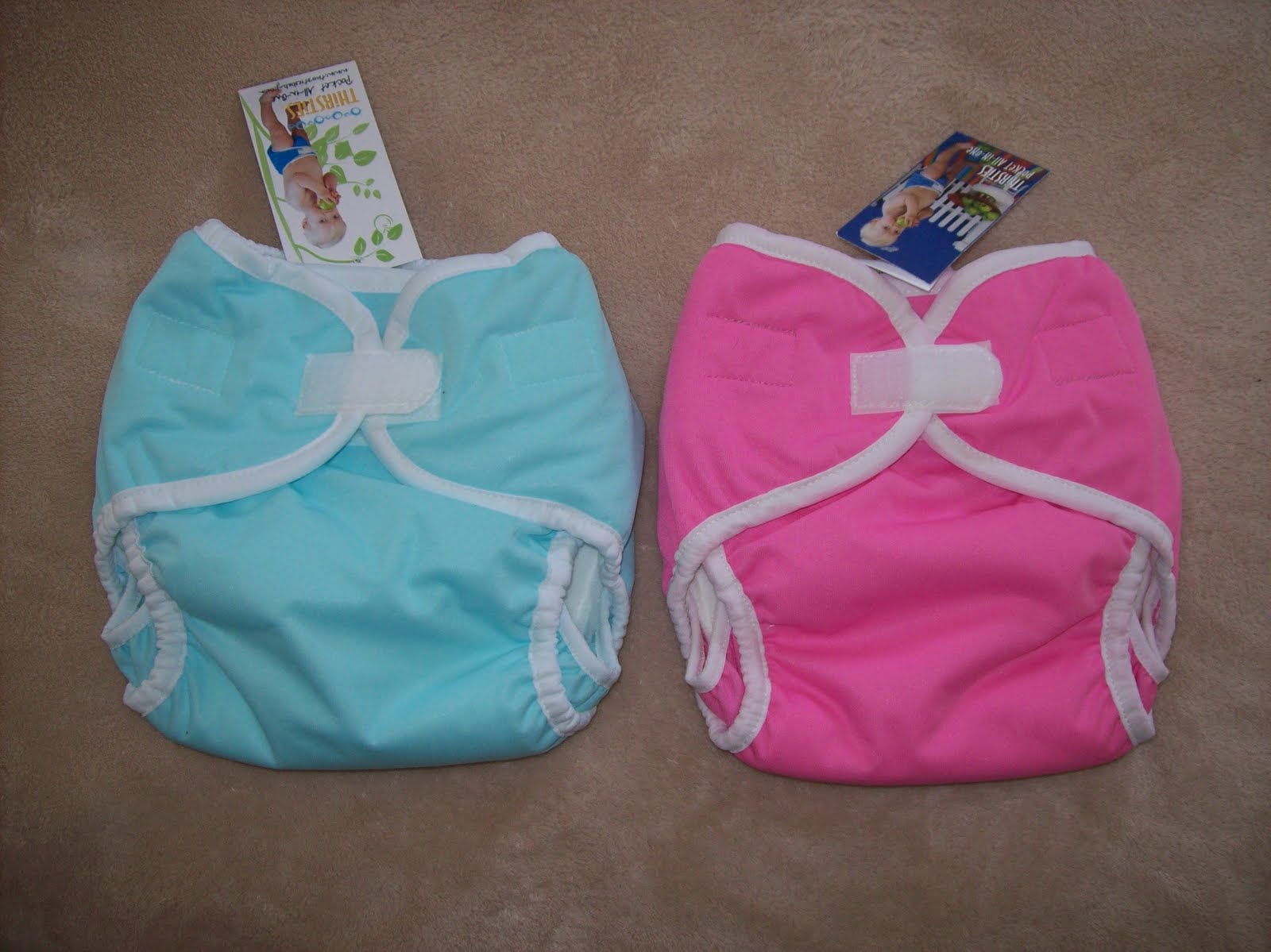
These diapers are just as their name implies - the diaper is all in one piece. These diapers are most similar to disposable diapers, and therefore are sometimes the choice of mamas wanting a simple cloth diapering option for daddies, grandmas, babysitters, daycare, or going out and about.

Thirsties AIOs front and inside


Nana's Bottoms newborn size AIOs front and back (top) and inside


Nana's Bottoms Action Shots: periwinkle is preemie size, the mauve is one of the newborn sized ones:


There are downsides to AIO's. Some take a long time to dry. (Others take very long!) I was always concerned about them getting really clean since there isn't a good way for the sudsy water to circulate well into the absorbent part of the diaper.

All In Two's:
Related to AIO's are AI2's, diapers that are still a single-use diaper, but the absorbent material can be removed for washing and drying. I have much less experience with these, since the ones I tried I didn't like much.

Bottombumpers AI2 - the long insert piece snaps out for laundering


Pockets:
I hate putting pockets this far down the post, because THESE ARE THE DIAPER I WOULD RECOMMEND to mamas starting with cloth diapering. If the idea of getting prefolds on your babe is what keeps you from trying cloth diapering, this is the system for you. I've always had a few pockets in our stash from the beginning, but now that I have more for daycare, I find myself using them even at night and on weekends. They are just so simple.

The pocket diaper is literally a pocket. The outer portion of the pocket is the waterproof material, usually PUL (polyurethane laminated polyester, mentioned previously). The inner layer that forms the pocket is usually fleece. Most fleece is "wicking", meaning it can transfer wetness and has a "stay-dry" feeling because the moisture is transferred to the absorbent material underneath. This makes pockets an especially good option for nighttime.

There are LOTS of options for the absorbent material inside the pocket - enough for a separate post!

The advantage to pockets over AIOs is that the absorbent material can be removed from the diaper to be washed, so you know that it is getting clean. Since it is a separate piece in the dryer, it usually takes less time to dry. A disadvantage is that the insert has to be "stuffed" back into the pocket after the laundry in order to have your diaper ready to use again.

Another advantage to the pocket - and again, this will be treated in the post on pocket inserts - is that you can customize the amount of absorbency you use to stuff the pocket. Have a heavy wetter? Add more absorbancy. Taking photos in a special outfit and need a trimmer diaper? Use a thinner insert - if the diaper is only on for a short time, absorbancy might not be an issue. Nighttime? Stuff away.

I have tons of photos of Wee One in pockets, since she's in them the majority of the time now. Of course the cow print diaper was a pocket, as are the Thirsties Duo Diapers that I rave about, and the Knickernappies OS that I won.

Thirsties Duo Size 2 in Meadow


Raspberry Knickernappies size Medium


Swaddlebees Size Small - when she was still less than 6 pounds. This is the first pocket I tried on her. Below are the photos I took when I sold these on Diaperswappers FSOT.


I started out buying sized pockets (size small, size medium) since I think they fit smaller babies better. Now that she is bigger, we can take advantage of the one-size (OS) diapers. The idea is that one-size-fits-all, which is why they are referred to as OS diapers. There are usually snaps that adjust the rise, and allow you to fold and snap down the front for smaller babies, then adjust as your baby grows. There are usually more snaps around the waist or longer aplix across the front to accomodate babies as their waist grows larger. The advantage is that a single diaper can fit babies of different sizes if you have two in diapers, or can fit your baby as (s)he grows. The disadvanges are that I don't think you get as good a fit on small babies like newborns, and the folding down and adjusting can create some bulk. I've also heard some OS get too small for big toddlers.

Thirsties has tried to address this issue with their line of Duo Diapers. The Duo Diapers have snaps in the front to adjust the rise so the diaper accomodates different sized babies. However, they come in two sizes, Size 1 for newborns and smaller babies, and Size 2 for bigger babies to toddlers. Wee One is in Size 2. I have to say I think these diapers will last her until she's out of diapers, because on the largest settings, the diaper is huge. However, it adjusts down to fit her now at 18.5 pounds and is still trim and not bulky.

Some popular OS diapers, in addition to the Knickernappies and Thirsties Duo, are the BumGenius brand.

BGOS blossom compared to Thirsties Duo Size 2 Storm Cloud, and both on her.


Thursday, February 18, 2010

Cloth Diapering 101 - materials and fabrics

In the first CD 101 post, I mentioned some aspects of fabrics, like PUL covers. The Lookie What I Made! post also discusses wool diaper covers. There are a number of choices when it comes to cloth diaper fabrics and materials. I'll share what I've learned, but this is no way comprehensive.

Cotton. This is the fabric of choice for prefolds, flats, and some fitteds. Very absorbent, so it holds alot of moisture. But it doesn't "wick" or move the moisture like some fabrics do, so the moisture stays right up against the skin. Most mamas change cloth diapers frequently, so this is not a problem for them.

Most cotton for prefolds is not organic, unless it is specified. And then you'll know, because the diapers will be quite a bit more expensive. But if you're determined to use all organic fabrics for your little one, you can find organic cotton prefolds.

"Sherpa" and "velour" (unless it is specified as bamboo velour) are types of cotton fabrics. Sherpa is textured like a thick cotton towel, and is a great fabric for fitteds. Kissaluvs fitteds are cotton sherpa, and lots of mamas swear by this fabric to "catch" the runny poo of breastfed newborns. Velour is very soft and is often used as the top layer next to baby's skin since it is so soft.
(A KLo - Kissaluvs size 0 fitted diaper - made of sherpa)

Bamboo. Another very popular fabric for cloth diapers is bamboo. There is much discussion over these fabrics, as research into the method of turning bamboo into fiber reveals that it is not as "natural" or "green" a process as most folks would believe. Some mamas now refer to the fabric as "rayon from bamboo" rather than "bamboo" to avoid being misleading about the nature of the fabric.
(A Bum Genius bamboo fitted - these are thick and soft, but are discontinued so you will only find them used on FSOT)

Bamboo fabric is very absorbent, and when made into a velour, is incredibly soft. It supposedly has natural antimicrobial properties that help it to not stink or grow bugs. However, it can sometimes stain more easily than other fabrics. Most bamboo fabrics need to be washed a number of times before they reach their full absorbency.

Hemp. Another natural fiber used in cloth diapers is hemp. Hemp is also very absorbent and is used quite a bit for the inner absorbent material in fitteds, and also comes in inserts for pockets. We use a hemp insert as part of our nighttime system. Hemp coupled with microfiber is pretty bulletproof for nighttime. I recently got some hemp prefolds that are thick and squishy and soft. I love them, but they are too pricey to buy any more right now.
(A hemp prefold over a GMD red for size comparison. This is from Knickernappies.)

Microfiber is a synthetic material used for pocket inserts. It is very very very (did I say very) absorbent. So much so, that you can not put microfiber next to your little ones skin. It will absorb the skin's moisture and cause redness and rashes. Microfiber absorbs fluid quickly, but can sometimes leak when pressure is applied ("compression leaks") like in a car seat. Microfiber also can sometimes get "the stinks" but I think that depends on your laundry routine. I have been using microfiber inserts for 10 months now with no stinks. But I don't use natural laundry detergent, either.

Partnering microfiber with hemp is a good system. The microfiber absorbs quickly. The hemp absorbs more slowly, but "stores" the fluid so it doesn't leak under compression. The new Thirsties Duo Diapers have a two-layer insert that snaps together - one layer is microfiber and the other layer is a hemp/cotton blend. Works like a charm.

PUL - this is the fabric that forms the waterproof layer of covers, pockets, and all-in-ones. It stands for polyurethane laminated, and is usually a laminated polyester fabric.

Wool - can be knit/crocheted or interlock. Interlock is used for covers, including pull-on covers, wrap-style covers, or interlock shorties and longies. Wool yarn can be knit or crocheted into longies, shorties, skirties, or soakers (a pull-on style cover). I did a whole post on wool previously - check the tags.

Fleece - used a couple of different places in cloth diapers. One, it can be used as a cover. There are fleece covers and fleece pants. Polyester fleece usually has a slight water resistant property, so it can be used as a cover, but usually does get damp and has to be changed after each wet diaper. For this reason they are usually called fleece "soakers". Two, fleece is usually used as the lining to pocket diapers to form the "pocket" that you stuff. Since fleece has this water-resistance to it, the moisture goes through the fleece to the insert to be absorbed, and the surface of the fleece feels fairly dry - so it is often called "stay dry" fleece. I have had people re-use the same diaper on wee one because it felt dry to them for this reason. Third, fleece can be used as liners in any kind of diaper. The idea is the same - it has this "stay dry" feeling to it. Diaper cream can ruin cloth diapers, but sometimes it is necessary even for a cloth diapered little one. In this case you can use small pieces of cheap fleece as "liners" to protect the inside of the diaper from the diaper cream, and to wick moisture away from the diaper area. Other mamas that don't like to deal with messy poo diapers use the fleece liners and have a different washing routine for them. They can also be used inside prefolds, which are cotton and can feel drenched when wet, for the "stay dry" effect.

Zorb - this is a new synthetic fabric that was going to transform the cloth diapering world. Only it didn't. It's ok. It's not nearly as absorbent as the hype would lead you to believe. It has to be sandwiched betweeen other absorbent layers like bamboo, which makes it bulkier than a single layer. But it doesn't have the stink issues that microfiber does. I have some bamboo/zorb inserts that we like to use as doublers in fitteds, or for extra overnight layers, and they work well.

Similar to what I said in the first CD 101 post - if you know WHY you are looking into cloth diapering, it helps you narrow the choices. Cotton is cheap, bamboo, hemp, and wool are more expensive. If you want all natural, you are gonna need to look at wool covers. If you want organic, you can find it, but you will pay more for organic diapers. If you want cute, lots of mamas make fitteds with cute knit outers and cotton velour or bamboo velour (soft!) insides, so you can enjoy the outside and your baby can enjoy the inside.

I'm hoping that the discussion about diaper types in the first post and fabrics in this post has helped give an outline of the choices in cloth diapering. I love to talk to moms considering cloth diapering about their options, so feel free to post a comment or send me an email, and I'll see if I can help.

Happy Diapering!

Tuesday, February 16, 2010

Cloth Diapering 101 - The Overview


So lots of people ask me about using cloth diapers. Most of the time, people think of cloth diapers as the prefold diapers that you get from the diaper service and use with rubber pants. Modern cloth diapering has a myriad of options, and can be quite different from what you would expect.

As a new mom, it is easy to get overwhelmed by the sheer options in modern cloth diapering. I joined a discussion board (Diaperswappers) to learn more, but most mamas use quite a bit of "lingo" and abbreviations that make it difficult to follow the conversation in the beginning.

To complicate matters further, there are a number of reasons a mama might want to start cloth diapering, and those reasons might help to influence the types of cloth diapers she might want to use. Knowing what you want to get out of cloth diapering, or the reasons you are starting, might help you in the long run. Some mamas just like the idea of "the best" for their baby - in which case cost for cute diapers might not be a problem. Other mamas want to help save the environment - I know I can't stand the thought of all those used diapers going into landfills every day. Some mamas want to try to save money by using reusable diapers. Some mamas have babies with sensitive skin (like mine) that have fewer rashes with cloth diapers. Some mamas want only all natural fibers next to their babies skin. Knowing the reason (or reasons) you want to try cloth diapering will help you wade through the choices.

This post will be an overview to kick off a number of posts about different aspects of cloth diapering. Each item will have other posts that provide additional detailed information - the overview is already long enough! Be sure to check the tags to find the posts on the types of diapers you are interested in. Let me know in the comments if you find any of this helpful.

Ok, here we go! A "diaper" actually requires two components - a part that absorbs and a part (waterproof or moisture resistant) that protects the clothes, bedding, furniture, carseat, etc, from getting wet. Cloth diaper "systems" have both elements.

Diaper and Cover

These systems most closely resemble your traditional "diaper and rubber pants" memory. The diaper component can be a flat, prefold, contour, or fitted, and the cover can be polyester, fleece, or wool. For this post, we will consider the polyester wrap-style covers.

A flat is a large square of thin material that can be folded in specific ways to put absorbency where you need it. A prefold is several layers of this thin material that is already shaped and sewn with the layers in the center. It still usually has to be folded to fit into the diaper cover. A fitted diaper has elastic around the legs, and sometimes has snap or velcro-type closure to keep it on. It is only made of absorbent material, however, and so will still need a waterproof cover. A contour diaper is somewhere in between a prefold and a fitted - it is usually cut to better fit inside a cover than the rectangular prefold, but might not have elastic or closures like the fitted.


The cover is usually a polyester fabric that has been laminated on one side with a very thin coating of a waterproof polymer. This fabric is usually referred to as PUL (polyurethane laminated) and so these covers are often referred to as "PUL covers". These covers can be re-used for several diaper changes, until they are soiled. They are similar to the "rubber pants" - however, they usually have velcro-like or snap closures on the sides, so they can be more easily removed from a soiled diaper. (No more pulling poopy rubber pants all the way down the legs to get them off!) As with anything else in life, there are tons of brands and you always wonder what is the best. Each has different features that some mamas can't live without and other mamas think are extraneous. I swear by Thirsties covers. They have leg gussets that help with the fit around the legs, they come in cute colors, they are not very expensive, they are well made and hold up for a long time, and they have laundry tabs to hold the aplix tabs so they don't get stuck on other diapers in the laundry. I have tried other covers that work similarly - Bummi's Super Brite and Bummi's Super Whisper Wrap were the first kinds of covers we tried. Those worked better when wee one was tiny, because the Bummi's newborn size fit better than the Thirsties XS size. However, the Bummi's don't have the leg gussets, and the Super Whisper Wrap is two layers of PUL which make it a heavier cover.


If you are looking into cloth diapering to try to save money by purchasing reusable diapers, the diaper-and-cover system can be the cheapest way to go. To save the most money, buy flats and a couple of covers. The flats are the cheapest, they will fit your baby as they grow depending on how you fold, and they can be hung to dry saving money on the laundering aspect. The downside is that there is a learning curve to learning to fold, and they may not be as absorbent as you need for a bigger baby or for nighttime. Prefolds run a close second for being affordable. However, you will need several different sizes over the course of diapering a baby, and there are folds to master here too. The simplest way to use a prefold is to fold it in thirds lengthwise and lay it into the cover. Lay your little one on top, and fasten the cover around them. Yes, it works.


Fitteds are more expensive than prefolds, and can run into the really expensive depending on what kind you get. See the post on fitteds for more discussion on this. One benefit to fitteds is that they fasten on without a cover. If you're hanging out at home, you can let your little one run around without a cover on. Some mamas say this helps prevent diaper rash, since the fitted is more breathable without a cover. Other mamas like to see the cute prints. Fitteds also help contain the poo in the diaper better than flats or prefolds, so you may be able to get away with fewer cover changes with fitteds. Since we don't use pins with prefolds, I use fitteds underneath woolies.

At this point I should probably discuss "one size" diapers. Some diapers are designed to be "one size fits most babies", and so they have some way of being adjusted to meet the needs of differently sized babies. The idea is to only have to purchase one diaper that will fit your baby from very tiny to very big. This usually works better in theory than in practice. Thirsties has come out with the idea of making two sizes, one for very small to medium sized babies, and one for medium to large toddlers. Their covers and their new pocket diapers are now available liek this. There is a cost savings to only having to buy two sizes of covers to range from small to extra-large, rather than having to buy four sizes of their previous style. However, some mamas have complained about the fit. I already had a set of medium sized covers, so I have not used the new style cover yet. I'll review it when I do.

Pocket Diapers

Another very popular type of diaper are pockets. These are diapers that look similar to the PUL covers, but there is an additional layer of fleece lining the inside that is open at one or both ends to create a "pocket". This pocket can be stuffed with the absorbent material. Pocket diapers, when stuffed, are very easy to use. Daddys, Grandmas, babysitters, and others not familiar with cloth diapers can easily recognize how to use the pocket diaper. They close in the front with velcro-like closures or snaps, and you put them on similar to disposable diapers. My daycare requires a "one-piece" cloth diaper, so I send pockets to daycare with the wee one.


There are some downsides to pocket diapers. You have to unstuff most styles of pocket diaper before putting them in the laundry, and then they all have to be re-stuffed after being dried. Most inserts are made of microfiber, which some mamas say get "the stinkies". I have not had this issue, but it gets discussed regularly on the discussion board. Pocket diapers are more expensive than prefolds and covers - and since the diaper is all in one piece, you can't re-use any part of it for the next diaper change.

Some brands of pockets are sized, meaning they come in different sizes. Some are "one size" (OS) similar to the discussion above about one size covers. The Bum Genius 3.0 is a popular one size diaper, as is the Thirsties Duo diaper that I love.

Hybrid Systems

The Gro-Baby and other systems fit into this category. The Gro Baby has a cover to fit multiple sized babies, with an absorbent insert that snaps into the cover. They tend to be pricey, and work similar to a prefold and cover system. I thought it was pretty pointless and sold mine after not using it very much. The cover worked well, but I prefer the Thirsties leg gussets and colors.


Ail-In-Ones

This is pretty much what it sounds like, a diaper that is all one piece. Has the advantages of pocket diapers in that it is easy to use, and most babysitters and dads are willing to use them, and you don't have to do the stuffing and unstuffing of pockets. However, they tend to take much longer to dry because you don't remove the absorbent material from the inside. I also tend to worry about them getting really clean. All-in-twos are similar to all-in-ones, but some or all of the absorbent material can be removed for washing and drying, eliminating some of that downside.


Many mamas use some of each of the different types, to meet different needs they have at different times. When I stayed at home with wee one for the first four months, we did mostly prefolds and covers, and experimented with other types. Now that she is in daycare and they require "one piece" diapers, we have pockets for that. Fitteds work better under covers since we don't pin prefolds. Our nighttime system uses pockets with extra inserts.

To add to the confusion, each diaper comes in a variety of styles and materials (more detail in a later post).

So its easy to be overwhelmed by the choices. But that's something that makes cloth diapering fun. You can always experiment and try a new diaper to see if you like it. There is always something new to try!